Firstbeam Sailing

Welcome To Firstbeam
Sailing Club
dd
| M | T | W | T | F | S | S |
|---|---|---|---|---|---|---|
| 1 | 2 | 3 | 4 | |||
| 5 | 6 | 7 | 8 | 9 | 10 | 11 |
| 12 | 13 | 14 | 15 | 16 | 17 | 18 |
| 19 | 20 | 21 | 22 | 23 | 24 | 25 |
| 26 | 27 | 28 | 29 | 30 | 31 | |
-
Bowline vs. Buntline
Bowline vs. Buntline Knot: Key Differences
The bowline makes a fixed loop that’s quick to tie, won’t slip under load, and is easy to untie—even after stress. It’s great for general use like tying to cleats, rings, or posts. The buntline knot also forms a loop but is more compact and stronger under tension. It’s ideal for securing ropes to spars (like masts or booms) and holds better under pressure due to an extra turn around the standing part. Use the bowline when you need versatility and ease. Choose the buntline when strength and security matter most.
Best Uses: Bowline vs. Buntline Knot
Bowline Knot Buntline Knot Quick, fixed loops High-load rope connections Attaching to cleats or rings Tying to masts, booms, or spars Easy to untie under load Compact and secure under tension General sailing Semi-permanent or load-bearing knots Rescue or temporary use Resists slipping under constant strain -
Sailing Practice Drills
Doing sailing drills is a great way to sharpen skills. Here are some of the well known ones.
Tacking and Jibing
Master turning the bow (tacking) and stern (jibing) through the wind. Practice these maneuvers to become smoother and more fluid in your movements.Man Overboard Drill
Practice recovering a person (or lifejacket!) from the water by turning the boat and positioning it to safely bring them back on board.Heaving To
Learn how to stop or slow the boat by heaving to, which is useful for taking a break, dealing with heavy weather, or pausing on a long voyage.Wind Awareness and Sail Trim
Practice adjusting your sails based on wind direction to maximize performance. Small changes in trim can have a big impact on speed and control.Docking and Undocking
Practice docking and undocking under various conditions, using fenders, handling lines properly, and communicating clearly with your crew.Crew Communication Drill
Clear communication is essential for smooth sailing. Practice giving commands and using hand signals, ensuring everyone on board is coordinated.Sailing in Different Conditions
Practice sailing in light winds, heavy gusts, and shifting conditions. The more experience you get, the more prepared you’ll be for any situation.Close-Quarter Maneuvering
Practice navigating tight spaces, avoiding collisions, and keeping control of your boat when moving through confined areas like marinas or narrow channels.Starting and Stopping the Boat
Practice starting and stopping the boat smoothly by controlling throttle and sails, making sure you can initiate and halt movement without abrupt motions.Reaching and Beating
Practice sailing with the wind coming from the side (reaching) and sailing as close to the wind as possible without stalling (beating). These points of sail are fundamental to efficient movement.The “Pinch” and “Ease” Techniques
Learn to “pinch” by sailing close to the wind, and “ease” by adjusting your sails to a more comfortable position. Mastering both techniques increases your control in varying wind conditions.Proper Use of the Rudder and Centerboard
Practice steering with the rudder and adjusting the centerboard for better control, especially in light winds. These elements are key for preventing side slip and maintaining course.Navigational Drills
Simulate simple routes using a chart, compass, and markers. This will help you improve your navigation skills and awareness of your position on the water.Reefing the Sail
Practice reefing your sail in strong wind conditions. This technique allows you to reduce sail area, maintain control, and avoid overpowering the boat when the wind picks up.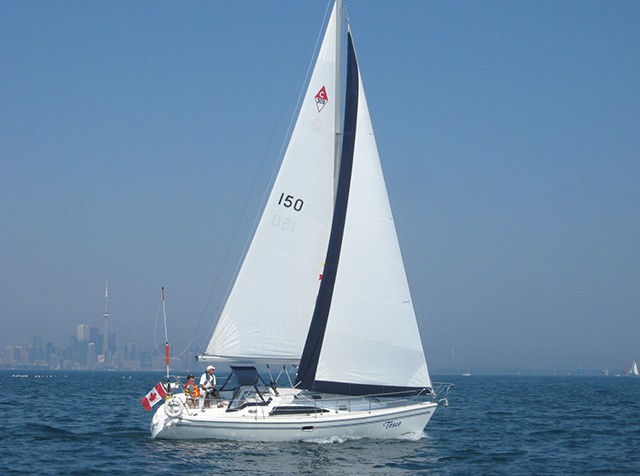
-
EPIRB vs PLB: What’s Better for Casual Sailboaters?
EPIRB vs PLB: Which One’s Best for Casual Sailboaters?
When it comes to safety on the water, having the right emergency device is crucial. Two common options are EPIRBs and PLBs, but which one should you choose?
An EPIRB (Emergency Position-Indicating Radio Beacon) is a large device usually mounted on your boat. If you’re in trouble, it sends out a distress signal to alert rescuers. EPIRBs are best for larger boats and more remote sailing trips.
A PLB (Personal Locator Beacon) is smaller and portable. You carry it with you, often on your life vest. It works similarly to an EPIRB but sends a distress signal about your personal location. It’s perfect for solo sailors or small crews.
So, which one should you get? For most casual sailboaters, a PLB is the better choice. It’s small, easy to carry, and more affordable. If you’re sailing on a larger boat or heading far from shore, an EPIRB might be worth considering.
Bottom line: For everyday sailing, a PLB provides the safety and simplicity you need. Whatever you choose, just make sure you have a way to call for help. Stay safe and enjoy your time on the water!
Latest Sailing News
Recent sailing headlines, updated automatically.
Scuttlebutt
- College sailing produced its most consequential weekend of the fall as Atlantic Coast Championship qualifiers, a MAISA conference […]
- A Miami tugboat captain who pleaded guilty in last year’s crash in Biscayne Bay involving a barge and […]
World Sailing
SailGP
Sailing World
- Gary Jobson was pretty spot on with his prognostications for the sport 25 years ago. He takes another […]
- College sailing big-boat squads put their keelboat skills on display in Chicago for the first of three fall […]
Yachting World
- Jimmy Cornell and his son, Ivan, carrying out traditional astronavigation during Cornell’s first round the world voyage. Photo: […]
- Hurricanes, typhoons, and cyclones are all tropical revolving storms and need to be fully understood by any aspiring […]